
MDR-SOC
- Home
- MDR-SOC
All-in-One Managed Cybersecurity for K-12 & Public Agencies
Complete Managed Cybersecurity Services for Schools and Public Agencies
One service. Full coverage. Endpoint management, security monitoring, data protection, and automated threat response — delivered as a managed service designed for the realities of public-sector IT.
- Dedicated Cybersecurity Advisor
- No Long-Term Contracts
- Built for Schools and Public Agencies
WHAT THIS SERVICE COVERS
- Endpoint management and remote device monitoring
- Antivirus and endpoint detection and response
- Ransomware detection and managed threat response
- Endpoint backup and data protection
- Automated security policy enforcement and reporting
- 24/7 managed Security Operations Center (SOC)
Endpoints Are the Frontline — And They're Under-Protected
74%
Of K-12 districts experienced a cyberattack in the past three years
"Public schools are among the most targeted institutions in the United States — and most attacks succeed because of gaps in endpoint security, patching, and monitoring that managed services are designed to close."
Source: CoSN K-12 Cybersecurity Report 2024
1 in 3
Public sector organizations have no tested endpoint backup plan
"Without reliable endpoint backup and recovery, ransomware attacks that encrypt or destroy data often result in extended downtime, large recovery costs, and significant data loss."
Source: Public sector IT management research
68%
Of breaches in public sector involve endpoints
"Endpoints are the most common point of compromise in public sector organizations, and effective protection requires unified monitoring, detection, and response — not point solutions."
Source: Verizon DBIR 2024 public sector analysis

Public entities face an increasingly complex cybersecurity environment with limited IT staff, growing device counts, and expanding compliance obligations. Most do not have the in-house resources to manage endpoint security, monitoring, backup, and threat response consistently — leaving critical gaps that are difficult to detect and expensive to remediate.
Why Public Entities Struggle to Maintain Full Security Coverage
Managing endpoint security, backup, and monitoring in-house is resource-intensive. Most public entities simply do not have the staff or tooling to do it consistently.
Limited Internal IT Capacity
Small IT teams in schools and public agencies are responsible for hundreds or thousands of endpoints. Adding consistent security monitoring, patching, and threat response is often not feasible without external support.

Point Solutions That Don't Work Together
Many organizations manage antivirus, remote monitoring, backup, and patching as separate tools with separate dashboards. Fragmented tooling creates visibility gaps and makes consistent policy enforcement nearly impossible.
Growing Compliance Obligations
FERPA, HIPAA, CJIS, and cyber insurance requirements increasingly expect documented evidence of endpoint security controls, monitoring, backup testing, and incident response capability.

Threat Volume Outpacing Response Capacity
Public sector organizations face phishing, ransomware, credential theft, and supply chain attacks at growing frequency. Without continuous monitoring and automated threat response, alerts go unreviewed.

Four Pillars of Complete Managed Security Coverage
Endpoint management, security, data protection, and automation are delivered together — not as separate tools from separate vendors requiring separate attention.
01
MANAGE
Endpoint Management
- Remote monitoring of every device
- Asset discovery and inventory
- Proactive patch management
- Remote support and troubleshooting
- Device health and compliance reporting
02
SECURE
Endpoint Security
- Antivirus and malware protection
- Endpoint detection and response (EDR)
- Ransomware detection and blocking
- Managed detection & response with 24/7 SOC
- Advanced software and third-party app management
03
BACKUP
Data Protection
- Endpoint backup for all managed devices
- Automated backup verification
- Recovery testing and documentation
- Ransomware recovery support
- Backup status visibility and alerting
04
AUTOMATE
Policy & Reporting
- Automated security policy enforcement
- Patch deployment and compliance automation
- Scheduled health and security status reports
- Alert routing and escalation workflows
- Automated documentation for audit and insurance
What the Managed Security Service Delivers
A complete managed security program — endpoint monitoring, security, data protection, patch management, and reporting delivered as a unified service for schools and public agencies.
Remote Monitoring & Management
Every endpoint across your organization is monitored continuously — with proactive alerts, health dashboards, and remote troubleshooting support so issues are identified before they cause disruption.
Endpoint Security & EDR
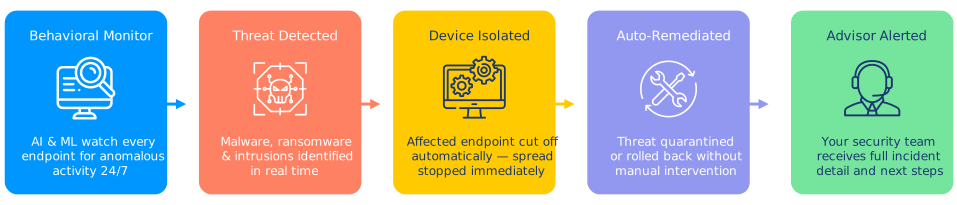
Antivirus, endpoint detection and response, and ransomware protection are deployed and managed across all devices. Threats are detected, contained, and responded to — not just flagged for an overwhelmed IT team.

24/7 Managed Threat Monitoring
A security operations center monitors your environment around the clock. Suspicious activity, behavioral anomalies, and active threats are reviewed by security analysts before escalation.

Endpoint Backup & Data Protection
Every managed device is covered by automated backup with regular verification and tested recovery. In the event of ransomware or hardware failure, recovery is faster and data loss is minimized.
Patch Management & Compliance
Operating system and third-party software patches are deployed on a consistent schedule across all managed endpoints. Patching compliance is documented and reportable for audit and insurance purposes.

Reporting & Documentation
Regular reports on device health, security events, patch status, backup verification, and threat activity are delivered. Documentation supports cyber insurance, compliance reviews, and board-level reporting.

AI-Powered
AI-Powered Security Automation That Works While Your Team Sleeps
- AI-assisted threat detection that identifies behavioral anomalies and suspicious endpoint activity across thousands of devices simultaneously — far beyond manual review capacity
- Automated patch prioritization that uses AI risk scoring to sequence patch deployment by CVE severity, public exploit status, and endpoint exposure level
- AI-powered ransomware behavioral detection that identifies encryption activity and lateral movement patterns before ransomware completes its attack cycle
- Automated security posture reporting that compiles device health, threat activity, backup status, and compliance metrics into scheduled reports without manual data gathering
A Perfect Fit for Schools and Public Entities.
Cybersecurity tools are designed for your budget, your team size, and your compliance requirements.
Built for Public Sector Constraints
Managed security for schools and public agencies requires an understanding of FERPA, HIPAA, CJIS, and the budget, staffing, and procurement realities of public organizations. The service model is designed around how public entities actually operate.

Lower Your Insurance Costs
Cyber insurers require documented evidence of endpoint security controls, monitoring, backup, and patch management. Managed security service documentation is prepared for your insurer, helping reduce premiums and satisfy coverage requirements.

One Service, One Advisor, One Bill
Endpoint management, security, backup, and automation are delivered together under a single managed service engagement. There is no need to manage multiple vendor relationships or coordinate between tools that were never designed to work together.
Flexible Service Models for Different Public Entity Needs
Co-Managed Security Services
Includes endpoint management, security monitoring, backup, patching, and threat response — delivered alongside your internal IT staff rather than replacing them. Your team retains ownership of day-to-day operations.

Best for: Public entities with internal IT staff who want to strengthen security coverage without adding headcount.
Fully Managed Security Services
Everything in the Co-Managed option, PLUS 24/7 SOC coverage. Alerts are monitored and triaged around the clock, so your organization has active protection outside of business hours without requiring internal staff to be on call.
Best for: Public entities without dedicated IT security staff, or those seeking to fully offload endpoint security operations.
How Managed Security Services Are Delivered
A straightforward three-step process to assess, deploy, and monitor your managed security environment.
01
Assess
Your current environment, device inventory, existing security tools, compliance obligations, and internal IT structure are reviewed. The scope of managed services most appropriate for your organization is defined collaboratively.
02
Deploy and Configure
Endpoint management agents, security tooling, backup coverage, and monitoring configurations are deployed across your managed devices. Security policies, alert thresholds, patch schedules, and reporting cadences are established based on your environment and requirements.
03
Monitor & Report
Your environment is continuously monitored for threats, device health issues, patch compliance gaps, and backup failures. Regular reports are delivered on security posture, threat activity, and endpoint status — keeping leadership informed.
Ready to Protect Your Organization?
Schedule a free assessment — a Cybersecurity Advisor will map ResoluteGuard Managed Security to your specific environment and walk you through your options.
- A Cybersecurity Advisor responds within 1 business day
- Built exclusively for schools and public entities
- Pricing built for public entity budgets — transparent, with no hidden costs
Prefer to call? Reach us directly:
888-728-6030 cyberadvisor@resoluteguard.com
Request a Free Assessment
No spam. No obligation. A real Cybersecurity Advisor will reach out — not a sales bot.
Endpoint Security
AI-powered protection on every device — stopping ransomware and zero-day threats before they spread.

Email Security
AI-powered protection against phishing, impersonation, and ransomware delivered to every inbox.

Remote Monitoring & Management
Keep every device automatically patched, updated, and healthy — 24/7.
Common Questions
Everything you need to know about managed security for schools and public agencies.
What is the difference between managed security services and managed IT services?
Managed IT services typically focus on helpdesk support, network administration, and day-to-day operations. Managed security services are specifically focused on cybersecurity — monitoring endpoints for threats, detecting and responding to attacks, managing security tools, and maintaining protective controls. This service is purpose-built for security outcomes, not general IT support.
Do we need to replace our existing IT team or tools to use managed security services?
No. Co-managed engagements are specifically designed to work alongside internal IT staff, complementing existing capabilities rather than replacing them. Tool consolidation and configuration are handled as part of the onboarding process, with decisions made collaboratively based on what your organization already has in place.
How does managed security help with cyber insurance?
Cyber insurers require documented evidence of security controls including endpoint protection, monitoring, patching, and backup. Managed security service documentation is prepared for your insurer, providing the evidence of active controls that insurance carriers increasingly require for coverage and favorable premiums.
What compliance frameworks does the service support?
The service supports FERPA, HIPAA, CJIS, NIST CSF, and CIS Controls — the frameworks most relevant to K-12 districts, community colleges, municipalities, and special districts. Compliance documentation and reporting are included in the service.
How long does it take to get managed security services running?
Deployment timelines vary by organization size and existing environment. Most engagements are fully deployed and operational within two to four weeks of the initial assessment. Endpoint agents, security tooling, and backup coverage are deployed in a structured sequence to minimize disruption.
Is there a minimum size or type of organization the service is designed for?
The service is designed specifically for K-12 school districts, community colleges, municipalities, special districts, and other public agencies. Organizations of all sizes are supported — from small rural districts with a few hundred devices to larger urban agencies with thousands of managed endpoints.
Have a question that isn’t answered here?