Vulnerability Scanning
- Home
- Vulnerability Scanning
Independent Vulnerability Scanning for K-12, Municipalities, and Public Agencies
External and Internal Network Vulnerability Scanning
Gain a clearer view of your security posture with non-invasive vulnerability scanning from a trusted third party. Known weaknesses are identified, explained in plain language, and prioritized so your team knows exactly where to focus.
- Dedicated Cybersecurity Advisor
- No Long-Term Contracts
- Built for Schools and Public Agencies
Vulnerabilities Sit Undetected — Until an Attacker Finds Them First
Most public entities focus on perimeter defenses — but attackers get in through vulnerabilities that have been sitting undetected for months. Unpatched systems, misconfigured services, and outdated software create exploitable footholds that external tools and internal monitoring typically miss without dedicated scanning.
60%
Of breaches involve unpatched vulnerabilities
"Known vulnerabilities with available patches account for the majority of successful attacks — because patches exist but scanning never confirmed whether they were applied."
Source: Ponemon/IBM research

200 Days
Average time a vulnerability exists before detection
"Most exploitable weaknesses sit undetected for months. Without regular scanning, your team cannot address what it cannot see."
Source: Industry vulnerability management studies

1 in 3
Public sector organizations never conduct internal vulnerability scanning
"External scanning is a start — but internal weaknesses are where attackers move once they gain initial access. Internal visibility is not optional."
Source: Public sector IT security surveys
External Scanning Is Important — But It Is Only Part of the Picture
External scanning shows what the internet can see
Internet-facing weaknesses — such as exposed services, outdated software, and known vulnerabilities on public-facing systems — are identified with external scanning. It is the first line of vulnerability visibility.

Internal scanning reveals risks an external view misses
Many significant weaknesses live inside the network, including vulnerable servers, workstations, network devices, and insecure internal services that external scans will never reach.
A stronger program requires both perspectives
A combined internal-plus-external approach gives your organization a more complete view of risk and helps prioritize what should be addressed first — based on real exposure, not just what is visible from the outside.

Independent, Non-Invasive Scanning Backed by Practical Guidance
External and internal network vulnerability scanning is provided as a trusted third-party resource, helping organizations identify security gaps without disrupting operations.
External Vulnerability Scanning
Internet-facing systems are assessed to identify known vulnerabilities, exposed services, and other weaknesses visible from outside the organization. Results are mapped against current CVE databases and threat intelligence.

Internal Network Vulnerability Scanning
Internal systems and infrastructure are evaluated to uncover risks across servers, workstations, network devices, and internal services. The internal scan covers what external tools cannot reach.

Easy-to-Understand Reporting
Reports are built for both leadership and IT teams — with clear executive summaries, prioritized findings organized by severity/probability, and practical remediation guidance for each identified issue.

Cybersecurity Advisor Support
Scan results are reviewed together with your team. Business impact is explained in plain language, and support is provided to prioritize what to address first.
- Independent validation from a trusted outside resource
- Non-invasive scanning designed to avoid operational disruption
- Visibility into both external and internal risk exposure
- Clear reporting for technical and non-technical stakeholders
- Practical prioritization based on severity and affected assets
- Guidance on remediation planning and next steps
AI-Powered
AI-Enhanced Vulnerability Intelligence That Prioritizes What Matters
AI analysis transforms raw scan data into prioritized action — matching your findings to current threat intelligence so the most dangerous vulnerabilities are addressed first.
- AI-assisted CVE matching that maps discovered vulnerabilities to the most current threat intelligence and active exploit databases
- Automated severity scoring that contextualizes findings based on asset criticality, network exposure, and exploitability
- AI-generated remediation prioritization based on exploit availability, asset exposure, patch maturity, and business impact
A Perfect Fit for Schools and Public Entities.
Cybersecurity tools are designed for your budget, your team size, and your compliance requirements.
Independent Third-Party Validation
Internal IT teams may have blind spots about their own environments. An independent third-party scan provides objective findings — the kind insurers, school boards, and regulators trust. Results carry more weight when they come from an outside resource.

Lower Your Insurance Costs
Vulnerability scanning is a foundational control in cyber insurance applications. Carriers want evidence of a scanning program — not just assurance that patching happens. Vulnerability scanning documentation is prepared for your insurer.

Reports Built for Real Decision-Making
Findings are translated into language your board, superintendent, or city manager can understand — not just technical output for IT staff. Every report includes a prioritized action list so decisions are made on risk, not raw data.
Find the Gaps Before Attackers Do
01
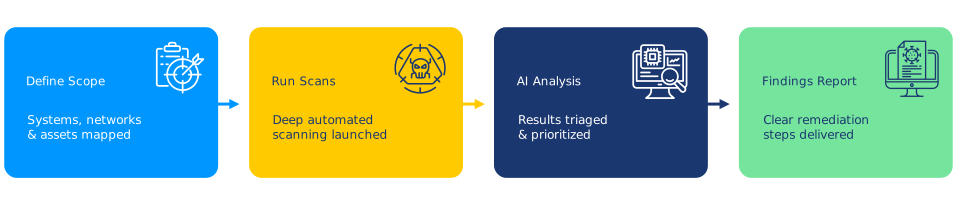
Scope the Scan
Internal and external scanning scope is defined together with your team, appropriate assets are identified, and the engagement is aligned to your environment. What gets scanned, when, and how is agreed upon before any scanning begins.
02
Run the Assessment
Non-invasive vulnerability scanning is performed across the agreed internal and external scope to identify known weaknesses without interrupting operations. Scan results are analyzed and mapped to current CVE intelligence and severity frameworks.
03
Review and Prioritize
Clear reports are delivered and results are reviewed with your team, explaining what was found, what it means, and which issues deserve immediate attention. Remediation support is available for organizations that need help acting on the findings.
Ready to Protect Your Organization?
Find out what vulnerabilities exist in your external and internal environment — at no cost and with no commitment. A Cybersecurity Advisor will follow up within one business day.
- A Cybersecurity Advisor responds within 1 business day
- Built exclusively for schools and public entities
- Pricing built for public entity budgets and funding cycles — transparent, with no hidden costs.
Prefer to call? Reach us directly:
888-728-6030 cyberadvisor@resoluteguard.com
Request a Free Assessment
No spam. No obligation. A real Cybersecurity Advisor will reach out — not a sales bot.
Endpoint Security
AI-powered protection on every device — stopping ransomware and zero-day threats before they spread.
Compliance as a Service
Stay audit-ready with continuous compliance monitoring for FERPA, CIPA, and NIST CSF.
AI Risk Assessment
Evaluate your exposure to AI-related threats and build a governance roadmap.
Common Questions
Everything you need to know about our Vulnerability Scanning program.
What is the difference between external and internal vulnerability scanning?
External scanning looks at your organization from the internet’s perspective — finding weaknesses that a remote attacker might discover and exploit before gaining access. Internal scanning looks at risk from inside the network, identifying the vulnerable systems, services, and configurations that become accessible once any initial foothold is established. Both are necessary for a complete picture.
Will the scan disrupt our network or operations?
No. Scanning is specifically designed to be non-invasive. The goal is to identify weaknesses — not to test them in ways that could cause disruption. Scan scheduling is coordinated in advance so your team is aware of timing and any considerations for sensitive systems or peak operational periods.
How is vulnerability scanning different from penetration testing?
Vulnerability scanning identifies known weaknesses using established CVE databases and scan signatures. Penetration testing goes further — it attempts to actually exploit those weaknesses to demonstrate what an attacker could achieve. Scanning is a practical first step that provides broad visibility; penetration testing provides deeper validation for specific concerns.
How often should vulnerability scanning be performed?
At a minimum, most frameworks recommend quarterly scanning for internal environments and monthly for internet-facing systems. Many schools and public agencies conduct scanning on a semi-annual or annual basis as a starting point. Scan frequency recommendations are made based on your environment, risk profile, and applicable compliance requirements.
Who gets the scan results?
Reports are delivered to your designated team. Each report includes an executive summary suitable for leadership and a detailed technical findings section for IT staff. Results are also reviewed together so your team understands the findings — not just a PDF in an inbox.
Does vulnerability scanning satisfy cyber insurance requirements?
Yes. Vulnerability scanning is one of the most commonly required controls in cyber insurance applications for schools and public agencies. Vulnerability scanning documentation is prepared for your insurer — including evidence of scope, methodology, findings, and remediation activity.
Have a question that isn’t answered here?